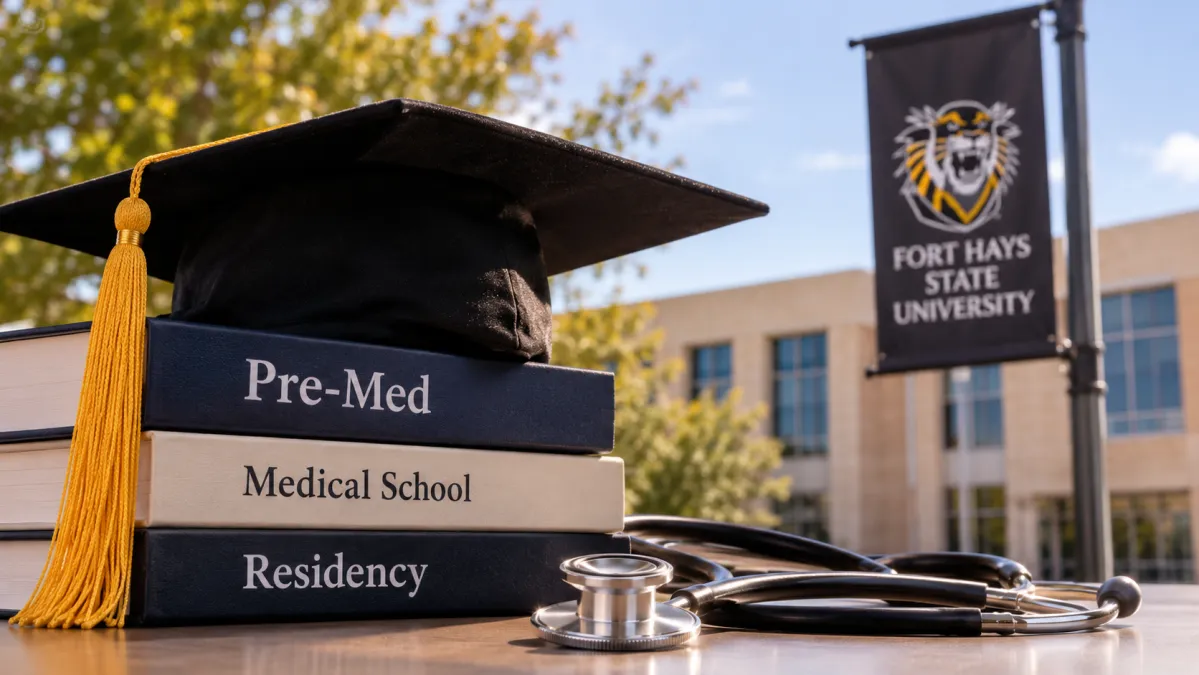
From undergraduate studies to an MD: understand the stages of medical education in the United States and what international students need to consider.
For Brazilian students, studying medicine in the United States may raise an important question: why is it not possible to complete high school and enter medical school directly, as is the case in Brazil?
The answer lies in the structure of the American higher education system. Unlike the Brazilian model, the traditional path to becoming a physician in the United States begins with an undergraduate degree lasting approximately four years. During this period, students can follow a preparatory pathway known as Pre-Med. Only after completing this stage can they apply to medical school, where formal medical training takes place.
This difference makes early planning essential. Understanding each stage is fundamental for anyone considering building a medical career abroad.
How Does Medical Education Work in the United States?
In simplified terms, the traditional pathway follows this structure:
High School → Undergraduate (Pre-Med) → Medical School (MD) → Residency
In Brazil, students can enter medical school directly after high school. In the United States, medical education requires a prior undergraduate degree, as well as the completion of specific academic requirements, which vary by institution.
This first stage is where the planning process begins for students who wish to apply to medical school.
Undergraduate Studies Before Medical School
An undergraduate degree is a university-level degree. A common misconception among Brazilian students is that there is a specific college degree called Pre-Med. In reality, the term refers to a preparatory pathway for applying to medical school, rather than necessarily being an independent undergraduate program.
During their undergraduate studies, students must complete courses required or recommended by medical schools. These may include:
- Physics;
- Mathematics;
- Biology and Biochemistry;
- Chemistry and Organic Chemistry.
In addition to academic performance, extracurricular activities, volunteer work, and experiences related to the healthcare field may also strengthen an application.
Requirements vary among universities. Therefore, researching the admission requirements of the medical schools a student is interested in from the beginning is essential.
What Is the MCAT and How Does the Application Process Work?
Completing an undergraduate degree does not guarantee admission to medical school. After graduation, students must go through a new admissions process, which may evaluate their academic records, completed coursework, extracurricular experiences, letters of recommendation, exam results, and interviews.
One of the best-known exams is the MCAT (Medical College Admission Test), which is used by several medical schools as part of their admissions process.
Preparation therefore takes place throughout undergraduate studies. The choice of degree, courses, and academic experiences can influence future application opportunities.
Medical School: Where Medical Training Begins
After completing their undergraduate degree and being accepted through the admissions process, students can enter medical school. The traditional program leading to an MD (Doctor of Medicine) degree typically lasts four years and combines scientific knowledge with clinical training.
After this stage, students begin Residency, which is equivalent to medical residency in Brazil. During this period, physicians receive specialized training in their chosen field. The duration varies depending on the specialty.
Thus, medical education in the United States involves several stages, from undergraduate studies to specialization, and can take many years to complete.
What About Those Who Have Already Studied Medicine in Brazil?
The pathway is different for those who already hold a medical degree from outside the United States.
These professionals are classified as IMGs (International Medical Graduates) and must meet specific requirements to pursue a position in American residency programs.
The Educational Commission for Foreign Medical Graduates (ECFMG) establishes certification requirements for international medical graduates who intend to enter residency or fellowship programs accredited by the ACGME. These requirements include exams such as USMLE Step 1 and Step 2 CK, as well as other certification criteria.
It is therefore important to distinguish between the two pathways:
For those who have not yet studied medicine: Undergraduate Studies → Medical School → Residency.
For those who are already physicians in Brazil: Medical Degree → IMG certification requirements → Exams and application for Residency.
These are different processes, each requiring planning according to the professional's academic background.
Can International Students Apply to Medical Schools?
Yes, but not all American institutions accept international applicants.
According to AAMC data for the 2025 application cycle, 43 medical schools indicated that they accepted international students. During the same period, 3,404 international applicants applied to MD programs in the United States, and 845 were accepted.
These figures reinforce the importance of researching each university's admission policies before beginning the application process.
Some of the main points students need to consider include:
- Academic requirements and prerequisite courses;
- Exams and documentation;
- Cost of education and financial aid opportunities;
- Proof of financial resources;
- Visa regulations and opportunities for continuing academic and professional development.
In addition to meeting academic requirements, students need to assess whether an institution offers conditions that align with their financial circumstances and goals.
How Long Does It Take to Become a Physician in the United States?
The length of medical training varies depending on the pathway and the specialty chosen. In the traditional pathway, the estimated duration is:
| Stage | Approximate Duration |
|---|---|
| Undergraduate | 4 years |
| Medical School (MD) | 4 yeras |
| Residency | Varies by specialty |
Combined programs and other educational formats also exist, but this is the most common structure. Therefore, planning should take into account each institution's requirements and the steps needed to practice medicine.
What Should Brazilian Students Consider?
For those who wish to study medicine in the United States, choosing a university begins even before medical school. Undergraduate studies are part of the preparation for a future application and should align with the student's academic goals.
Before starting this journey, it is important to consider:
- Choice of undergraduate degree: Check whether the program allows students to complete the prerequisites required by their intended medical schools.
- Institutions of interest: Research which universities accept international students.
- Academic requirements: Understand the required courses, exams, and documentation.
- Financial planning: Consider tuition, housing, food, health insurance, transportation, and application fees.
- Continuing education: Understand the requirements for medical school, residency, and professional practice.
More than simply choosing a university, students need to understand how each stage connects to their goal of building a medical career in the United States.
From Hayek to Medical School: Discover the Pre-Med Pathway
For those who wish to build a medical career in the United States, academic planning can begin while still in Brazil. Through Hayek Global College and its partnership with Fort Hays State University (FHSU), students can begin their journey within the American education system and prepare for the next stages of medical education.
The pathway begins with two years of study at Hayek Global College in Brasília. Students then continue their education for approximately two and a half years at Fort Hays State University in Kansas, where they can pursue their academic pathway through Pre-Med (pre-medical preparation).
At this stage, preparation includes fundamental courses for applying to American medical schools, such as Biology, Chemistry, Physics, and Mathematics. Students also receive guidance from academic advisors who help them organize their prerequisite courses and prepare for the Medical College Admission Test (MCAT), an exam required by many medical schools in the United States.
Fort Hays offers different academic pathways for students interested in the healthcare field. These include Pre-Medicine, with a degree pathway in Chemistry, and Health Professions, associated with a Biology degree pathway and preparation for careers in healthcare.
After completing the academic requirements and taking the MCAT, students may apply to medical school. Admission depends on each institution's selection process. Once accepted, students begin a new stage: approximately four years of medical education, followed by Residency, a period of specialized clinical training that completes the future physician's education.
It is important to note that Fort Hays does not offer a medical school. Its role in this pathway is to provide the academic preparation students need to pursue admission to a medical school.
Learn More About American College
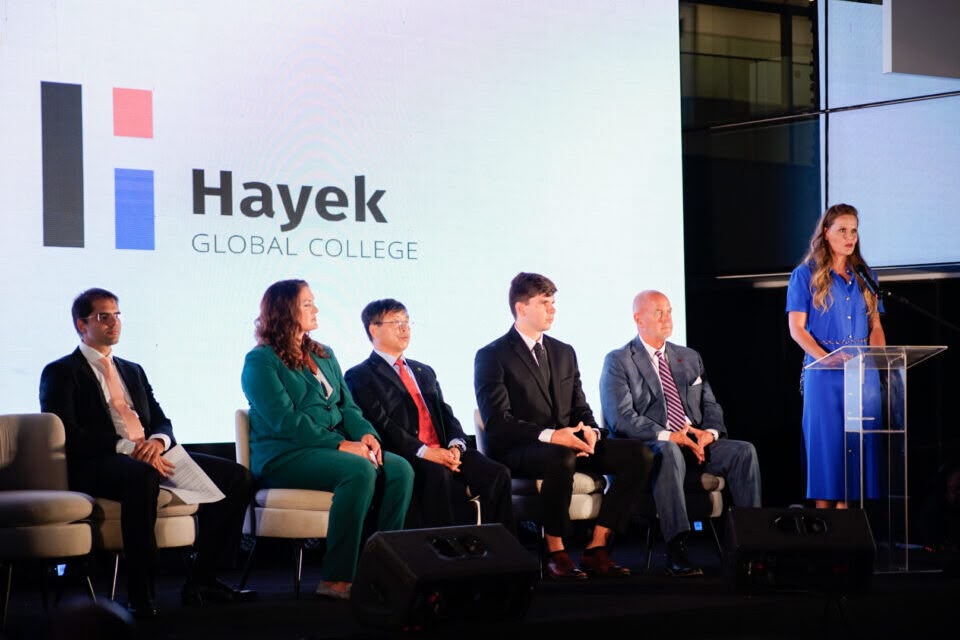
For those who wish to begin an undergraduate degree with an American curriculum and gain international academic experience, Hayek Global College offers American College. This program allows students to begin their studies in Brasília and, through the 2+2 model, continue their education at partner universities in the United States.
With classes taught in English and an American curriculum, the program offers students the opportunity to experience the American higher education model from the beginning of their undergraduate studies.